
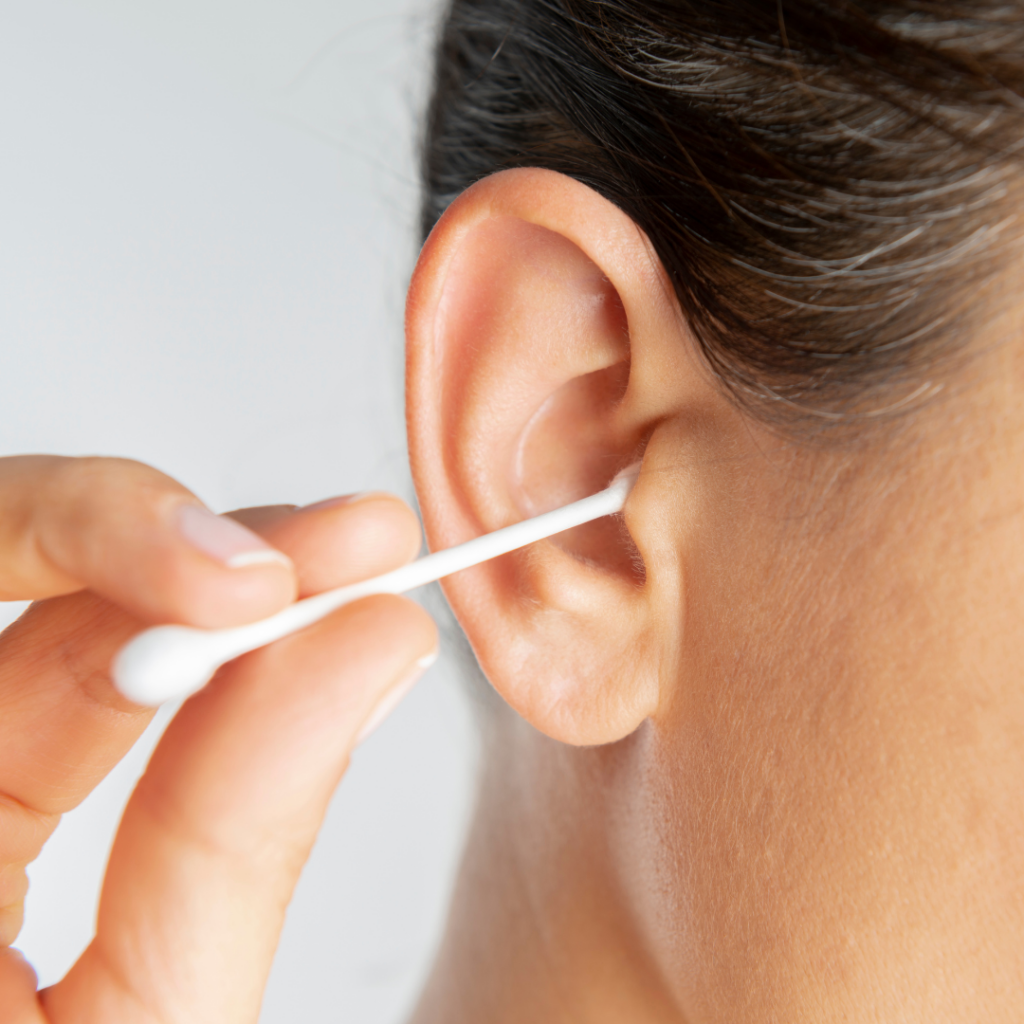
Even though cotton swabs seem practical for routine hygiene, probing the inner canal creates deeper impactions and threatens long-term ear health. We assess whether your earwax demands professional intervention and provide customized care strategies that match your clinical profile. Healthy ears rarely require aggressive manual intervention; nevertheless, when blockage develops, we assist patients in safely extracting excess cerumen.
What Makes Q-Tips Harmful to Ear Health?
Biologically, earwax—known clinically as cerumen—is not an unhygienic waste product. This substance captures environmental dust, restricts bacterial colonization, conditions the delicate canal walls, and defends fragile skin. Normal jaw articulation and progressive skin turnover transport old cerumen toward the external ear opening, where it naturally detaches.
Using a cotton swab within the ear canal halts this physiological self-cleaning function. Even though the applicator collects minor residue, it typically drives the bulk of cerumen directly toward the delicate eardrum. Repeated use can pack wax into a firm blockage and create the plugged sensation that encourages even more cleaning.
While cotton swabs are acceptable for cleansing the external folds of the pinna, they must never pass into the ear canal.
Mechanical Trauma: Risks of Cotton Swabs in the Ear
The delicate dermal lining of the auditory canal is remarkably thin and susceptible to lacerations. Minor scratches can trigger localized pain, bleeding, and bacterial infiltration, substantially elevating the risk of otitis externa. Furthermore, the cotton fibers may separate from the stick, leaving a foreign body lodged within the canal.
Possible injuries include:
- Severe earwax impaction near the tympanic membrane
- Scratches, irritation, swelling, or bleeding
- Acute otitis externa or canal infection
- Cotton swab fragments trapped inside the auditory canal
- Traumatic puncture or laceration of the eardrum
- Damage to the tiny acoustic middle-ear bones
- Temporary or permanent hearing changes
- Ringing in the ears, balance disruption, or sharp ear pain
Although catastrophic damage remains relatively rare, unexpected arm bumps, hand slips, or excessive insertion depth easily cause acute harm.
Determining the Proper Frequency for Earwax Removal
Clinical extraction of earwax is not routinely required on a fixed schedule for most patients. Healthy ear physiology steadily propels wax toward the surface, where daily hygiene cleans the external ear. Frequent overcleaning creates dry, irritated canal surfaces while amplifying the risk of severe impaction or microbial invasion.
Cerumen removal is indicated when buildup obstructs the canal, hinders tympanic membrane visualization, degrades hearing aid performance, or generates symptoms.
Clinical Guidance for Safe At-Home Cerumen Care
If earwax produces no discomfort or auditory decline, leaving it undisturbed is consistently the safest choice. Wipe only the outer ear with a soft, damp cloth, and let the canal clean itself.
If hardened wax requires softening, we can guide you toward over-the-counter cerumenolytics or drops featuring mineral oil, carbamide peroxide, glycerin, or saline. Administer strictly the dosage indicated on the packaging and adhere precisely to the recommended treatment duration. Immediately halt applications if the medication triggers pain, profound dizziness, skin irritation, or deteriorating symptoms.
Performing irrigation at home is unsafe for certain individuals and must only proceed after a clinician verifies ear safety and explains the protocol. Never use a dental water jet. Refrain from using ear candles, rigid metal picks, DIY camera probes, hairpins, or commercial home suction kits. These products may burn, cut, puncture, or push wax farther inward.
Indications for Scheduling a Professional Ear Cleaning
You should book a clinical appointment if your ear feels blocked following softening drops, cerumen is deeply wedged, or home methods fail to work. Expert removal is the safest path for patients who struggle to hold still, individuals with narrow ear canals, hearing aid wearers, or those with surgical contraindications to irrigation.
You should seek professional assessment for:
- Acute otalgia, unrelenting canal pruritus, or physical tenderness
- Visible blood, purulent discharge, clear fluid drainage, or offensive ear odors
- Pyrexia or localized tissue swelling surrounding the ear canal
- The rapid emergence of tinnitus or episodic dizziness
- Sudden reduction in hearing or auditory loss that persists after wax extraction
- Concern regarding a perforated eardrum or foreign cotton debris
- Recurrent impaction that affects hearing devices
You should always treat sudden unilateral hearing loss as an urgent medical emergency instead of assuming simple cerumen occlusion. Fast diagnostic testing reliably differentiates a conductive wax plug from an acute, time-sensitive sensorineural emergency.
How Healthcare Providers Extract Impacted Earwax
We always inspect the canal directly using an illuminated otoscope or surgical microscope to confirm cerumen buildup and evaluate for inflammation, injury, or eardrum ruptures. The safest removal method depends on wax consistency, canal anatomy, medical history, previous surgery, and the patient’s ability to tolerate the procedure.
Standard clinical removal options include:
- Medical-grade wax softeners administered prior to or during the procedure
- Safe low-pressure irrigation using body-temperature solutions on intact tympanic membranes
- Safe, gentle suction extraction executed under direct microscopic guidance
- Precision manual debridement using sterile ear curettes, loops, or specialized forceps
Continuous visual monitoring enables the practitioner to navigate around sensitive epithelial tissue and pause immediately if discomfort arises. Resolving highly compacted or dry earwax often involves integrating multiple clinical removal techniques. Once the wax is cleared, we reexamine the ear to ensure the auditory canal and eardrum remain completely healthy. When symptoms like fullness, tinnitus, vertigo, or hearing loss continue, supplementary audiological assessments can uncover alternate conditions.
Request an Appointment for Clinical Earwax Removal
Should you experience aural fullness or sudden hearing shifts, arrange a clinical evaluation with our office instead of relying on cotton swabs. We begin your evaluation with an in-depth review of symptoms, surgical ear history, hearing aid maintenance, home cleaning attempts, and individual tendencies toward wax accumulation. Connect with our practice today to reserve an appointment for safe, professional earwax removal.